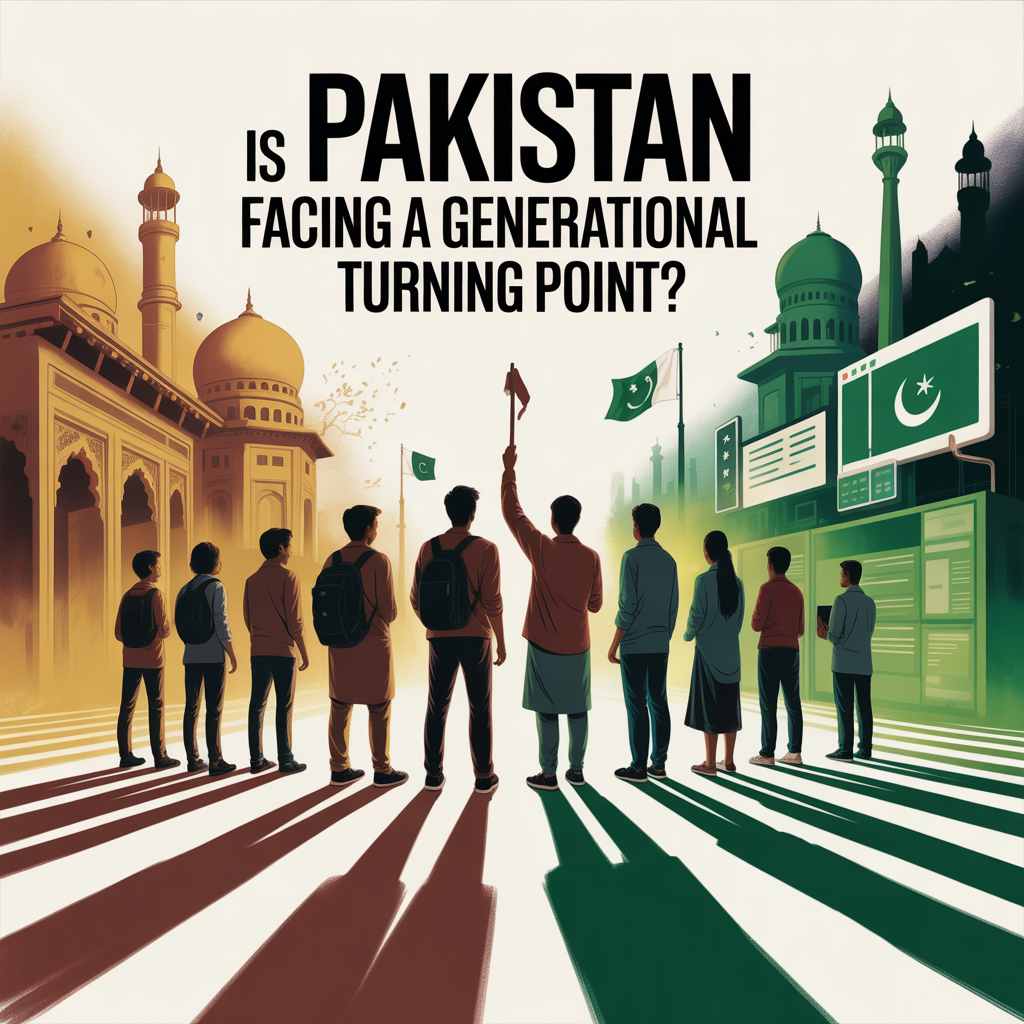
Is Pakistan facing a generational turning point? This question resonates across drawing rooms in Karachi, university campuses in Lahore, and policy circles in Islamabad. As the nation stands at the crossroads of demographic transition, technological disruption, and socio-political awakening, understanding this pivotal moment becomes essential for anyone invested in Pakistan’s future.
Understanding Generational Turning Points
A generational turning point occurs when demographic, technological, and social forces converge to fundamentally alter a nation’s trajectory. These moments don’t announce themselves with fanfare—they unfold gradually through shifts in values, economic patterns, and collective consciousness.
Pakistan today exhibits multiple indicators of such a transformation. With over 64% of its 240 million population under the age of 30, the country possesses what demographers call a “youth bulge”—a double-edged sword that can either fuel unprecedented growth or catalyse instability.
Dr. Nadia Rahman, a sociologist at Lahore University of Management Sciences (LUMS), observes: “We’re witnessing the first truly digitally native generation in Pakistan come of age. Their worldview, shaped by social media, global connectivity, and access to information, differs fundamentally from previous generations. This isn’t just a gap—it’s a chasm that’s redefining Pakistani society.”
The Demographic Dividend: Opportunity or Crisis?
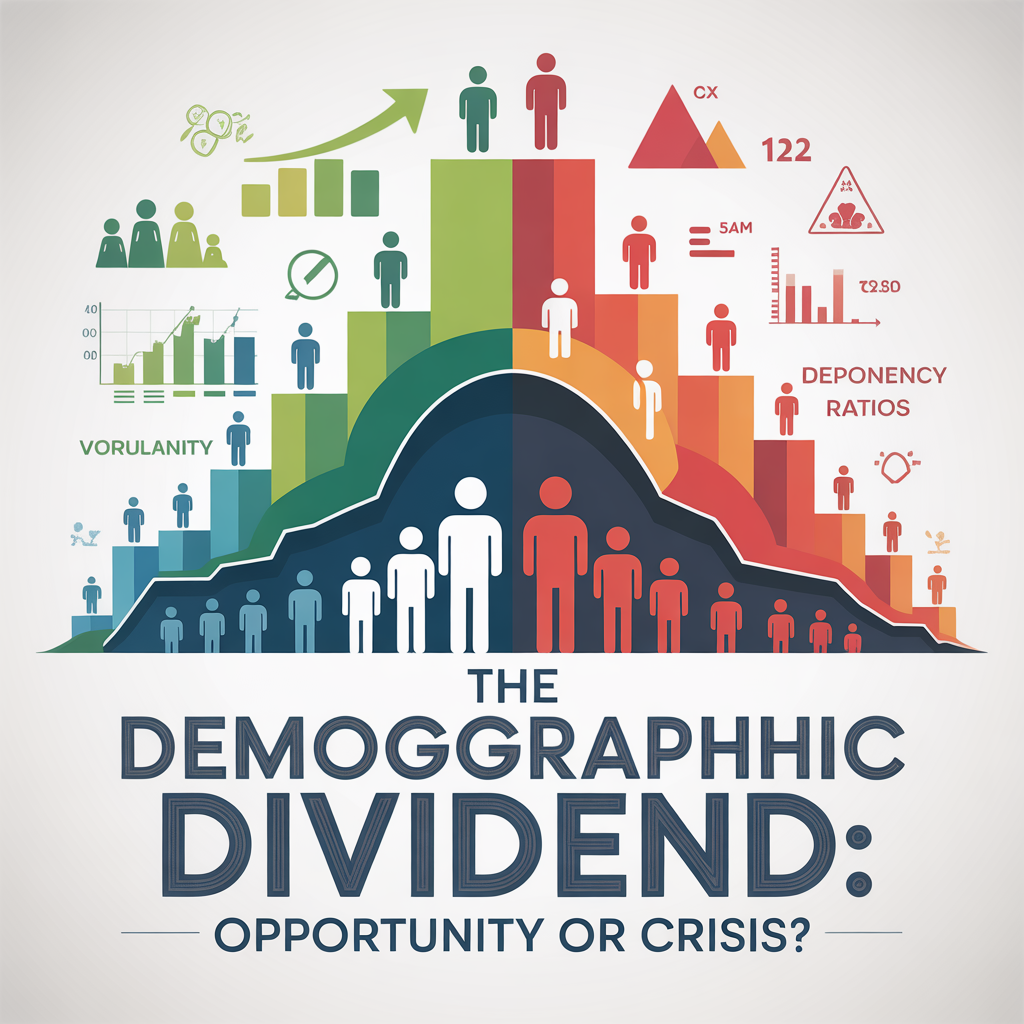
Pakistan’s demographic profile presents a statistical paradox. The country adds approximately 4 million people to its population annually, with the median age hovering around 22 years. This youthful population represents enormous potential—if properly educated, skilled, and employed.
However, the reality paints a concerning picture. Youth unemployment stands at approximately 10.9%, but underemployment tells a more troubling story. Millions of young Pakistanis work in informal sectors without job security, benefits, or opportunities for advancement.
Economic analyst Faisal Mahmood notes: “The demographic dividend only materializes when accompanied by strategic investments in education, healthcare, and job creation. Without these prerequisites, a youth bulge transforms into a demographic disaster—a large, unemployed, and frustrated young population that threatens social stability.”
The contrast with neighboring countries proves instructive. Bangladesh leveraged its demographic advantage through targeted investments in textile manufacturing and export-oriented industries. India’s IT sector absorbed millions of educated youth. Pakistan, meanwhile, struggles to create sufficient formal sector employment despite having a comparable youth population.
Digital Transformation and the New Pakistani Identity
Perhaps nowhere is generational change more visible than in Pakistan’s digital landscape. Mobile phone penetration exceeds 90 million unique subscribers, while internet users have crossed 125 million. This connectivity fundamentally alters how young Pakistanis perceive themselves and their place in the world.
Social media platforms have become alternative public squares where traditional hierarchies hold less sway. A young content creator from interior Sindh can reach millions without traditional gatekeepers. This democratization of voice represents a seismic shift in Pakistani society, historically structured around family lineage, institutional authority, and geographic proximity to power centers.
The rise of Pakistan’s freelancing economy illustrates this transformation. Pakistani freelancers earned over $400 million in 2023, ranking among the top countries globally in freelance services. This new economy operates beyond traditional employment structures, enabling young people to build careers independent of family connections or institutional affiliations.
Tech entrepreneur Sara Ahmed reflects: “Digital platforms allow Pakistani youth to bypass broken systems. They’re creating opportunities for themselves rather than waiting for jobs that never materialize. This self-reliance represents a fundamental shift in mindset—one that could reshape Pakistan’s economic future.”
Political Awakening and Civic Engagement
The relationship between young Pakistanis and political power has evolved dramatically. Unlike previous generations that viewed politics through the lens of dynastic loyalty or institutional allegiance, today’s youth approach civic engagement with skepticism and pragmatism.
Mass movements in recent years demonstrate this shift. Young people organize through social media, mobilize around specific issues rather than personalities, and hold leaders accountable in ways previous generations did not. This represents a maturation of Pakistani civil society—a movement from personality-driven politics toward issue-based advocacy.
However, this political awakening exists alongside troubling trends. Political polarization has intensified, with social media echo chambers amplifying divisions. Misinformation spreads rapidly, and constructive dialogue across ideological lines becomes increasingly difficult.
Political scientist Dr. Imran Khalid observes: “We’re experiencing growing pains of democratic maturation. Young Pakistanis demand accountability and transparency, but they’re also navigating unprecedented information overload and manipulation. How this generation reconciles these contradictions will define Pakistan’s political future.”
Education System: Preparing or Failing the Next Generation?
Pakistan’s education system remains the critical bottleneck in realizing generational potential. Despite improvements in enrollment rates, quality concerns persist across all levels. The disconnect between educational outputs and market requirements creates a generation equipped with degrees but lacking practical skills.
The education landscape shows stark disparities. Elite private institutions produce globally competitive graduates, while public schools in rural areas struggle with basic infrastructure. This inequality perpetuates social stratification and limits social mobility—the very mobility that generational turning points require.
Furthermore, curriculum challenges persist. Rote memorization dominates pedagogy, critical thinking receives insufficient emphasis, and STEM education lags behind global standards. These systemic issues compound the challenge of preparing young Pakistanis for a rapidly evolving global economy.
Education reformer Ayesha Farooq argues: “We’re preparing students for yesterday’s economy while tomorrow’s economy demands entirely different skills. Until we fundamentally reform our educational philosophy—emphasizing creativity, problem-solving, and adaptability—we’ll continue producing graduates unprepared for the modern workplace.”
Economic Restructuring and New Opportunities
Pakistan’s economy stands at a critical juncture. Traditional sectors face mounting challenges while new opportunities emerge in technology, renewable energy, and services. How Pakistan navigates this transition will determine whether the current generation inherits stagnation or prosperity.
The startup ecosystem shows promise. Pakistani startups have attracted hundreds of millions in venture capital, creating thousands of jobs and demonstrating that innovation can thrive despite systemic challenges. These companies—in fintech, e-commerce, logistics, and healthcare—represent potential blueprints for economic transformation.
However, structural impediments remain. Doing business in Pakistan continues to challenge entrepreneurs with bureaucratic red tape, inconsistent policies, and infrastructure deficits. Brain drain accelerates as talented young people seek opportunities abroad, depriving Pakistan of human capital it desperately needs.
The remittance economy presents both opportunity and concern. Pakistanis working abroad send home over $30 billion annually, providing crucial foreign exchange and supporting millions of families. Yet this dependency on remittances indicates domestic economic failures—the inability to create sufficient opportunities at home.
Climate Change: The Defining Challenge
No discussion of Pakistan’s generational turning point is complete without addressing climate change. Pakistan ranks among the countries most vulnerable to climate impacts, despite contributing minimally to global emissions. The devastating 2022 floods that affected 33 million people provided a sobering preview of challenges ahead.
Young Pakistanis increasingly recognize climate change as an existential threat. Environmental activism grows, particularly among urban youth, who demand sustainable development policies and climate action. This awareness represents a departure from previous generations’ primary focus on immediate economic concerns.
Environmental scientist Dr. Hassan Ali states: “Climate change will disproportionately affect Pakistan’s young people—they’ll inherit water scarcity, agricultural disruption, and increased natural disasters. How this generation responds to climate challenges will determine Pakistan’s long-term viability.”
The agricultural sector, employing over 40% of Pakistan’s workforce, faces mounting pressures from changing rainfall patterns, rising temperatures, and water scarcity. Young people in rural areas increasingly migrate to cities, accelerating urbanization and straining already inadequate urban infrastructure.
Cultural Shifts and Social Values
Beneath economic and political changes, deeper cultural transformations unfold. Traditional social structures—built around extended families, tribal affiliations, and patriarchal hierarchies—face challenges from younger generations influenced by global cultural trends and different value systems.
Gender dynamics evolve, though unevenly. Urban educated women increasingly pursue careers, delay marriage, and assert agency over life choices. Yet these changes remain concentrated in urban areas and educated classes, while rural Pakistan and conservative communities maintain traditional norms.
The tension between tradition and modernity creates what sociologists term “cultural lag”—where technological and economic changes outpace social and institutional adaptation. Young Pakistanis navigate multiple identities: they’re globally connected yet locally rooted, modern in outlook yet respectful of tradition, individually ambitious yet family-oriented.
This navigation isn’t always smooth. Mental health challenges increase as young people manage competing expectations and pressures. The conversation around mental health—previously taboo—gains traction, particularly among urban youth who increasingly seek professional support and discuss these issues openly.
Regional Dynamics and Geopolitical Context
Pakistan’s generational turning point doesn’t occur in isolation. Regional dynamics—relationships with India, Afghanistan, China, and Middle Eastern countries—shape opportunities and constraints facing young Pakistanis.
The China-Pakistan Economic Corridor (CPEC) represents both opportunity and concern. Infrastructure investments could catalyze economic growth, but questions about debt sustainability and employment benefits persist. How CPEC evolves will significantly impact economic prospects for Pakistan’s young workforce.
Relations with India remain complex. Despite political tensions, people-to-people connections persist through digital platforms, cultural exchanges, and shared linguistic heritage. Many young Pakistanis and Indians engage online, discovering commonalities that transcend national narratives—a potentially significant long-term development.
The Role of Diaspora and Global Integration
Pakistan’s diaspora—numbering over 9 million worldwide—plays an increasingly important role. Beyond remittances, diaspora Pakistanis provide knowledge transfer, business connections, and advocacy. The rise of reverse migration, where diaspora members return to establish businesses or pursue opportunities, introduces global perspectives and capital.
Social media enables unprecedented diaspora engagement. Young Pakistanis abroad maintain strong connections with home, influence cultural trends, and shape narratives about Pakistan globally. This transnational identity—simultaneously Pakistani and global—represents a new phenomenon with significant implications.
Institutional Capacity and Governance
Perhaps the most critical factor determining whether Pakistan successfully navigates this generational turning point is institutional capacity. Strong institutions—independent judiciary, efficient bureaucracy, accountable law enforcement—provide the foundation for sustainable progress.
Pakistan’s institutions face legitimacy challenges. Corruption persists, meritocracy remains elusive, and institutional decision-making often reflects personal interests rather than public good. Young Pakistanis express frustration with these failures, seeking opportunities abroad or withdrawing from civic engagement.
Governance expert Dr. Amina Saleem argues: “Institutional reform represents Pakistan’s most urgent need. Without strong, transparent institutions, Pakistan cannot capitalize on its demographic dividend or navigate current challenges successfully. The question is whether current leadership recognizes this urgency.”
Technology, Artificial Intelligence, and Future Readiness
As artificial intelligence and automation reshape global employment, Pakistan faces critical questions about future readiness. Jobs in manufacturing, services, and even professional sectors face disruption from AI and robotics. Preparing young Pakistanis for this future requires educational and policy interventions that haven’t yet materialized.
The digital divide compounds these challenges. While urban educated youth access cutting-edge technology and develop relevant skills, millions in rural areas lack basic digital literacy. This divide threatens to create a two-tier society—those equipped for the AI age and those left behind.
Yet opportunities exist. Pakistan’s large, young, tech-savvy population could become a competitive advantage in the global digital economy. Coding academies, online learning platforms, and tech training programs proliferate, often filling gaps left by formal education systems.
Pathways Forward: Scenarios and Possibilities
Pakistan’s generational turning point could unfold along multiple trajectories. The optimistic scenario sees Pakistan leveraging its demographic dividend through strategic investments in education, fostering innovation ecosystems, and implementing governance reforms that restore institutional credibility.
In this scenario, Pakistan becomes a regional economic powerhouse, its young population driving growth across technology, manufacturing, and services. Democratic institutions strengthen, rule of law prevails, and social mobility increases. Brain drain reverses as opportunities at home rival those abroad.
The pessimistic scenario sees Pakistan failing to capitalize on demographic opportunity. Unemployment festers, social instability increases, and institutional capacity degrades further. Climate change exacerbates resource scarcity, triggering conflicts and mass displacement. Young people flee when possible, trapped when not.
The most likely scenario falls between these extremes—uneven progress marked by advances in some sectors and regions, stagnation in others. Urban centers continue developing while rural areas lag. Some industries thrive while others struggle. Improvements in education and governance proceed slowly, insufficient to meet growing needs but preventing total collapse.
Conclusion: A Generation’s Responsibility
Is Pakistan facing a generational turning point? The evidence suggests yes—demographic, technological, economic, and social forces converge to create a moment of profound possibility and peril. How Pakistan navigates this moment will determine prospects not just for current youth but for generations to come.
This isn’t primarily a question for policymakers or institutions, though their role remains crucial. It’s a question for Pakistan’s young people themselves—the 150 million citizens under 30 who will inherit Pakistan’s future and shape it through their choices, activism, and aspirations.
The turning point is here. The direction it turns depends on decisions made today—in policy chambers and family discussions, in startups and classrooms, in civic activism and daily choices. Pakistan’s youth possess unprecedented tools, connectivity, and awareness. Whether these resources translate into national transformation remains Pakistan’s central question as it moves forward.
FAQs
What is the current youth population percentage in Pakistan?
Pakistan has approximately 64% of its 240 million population under the age of 30, making it one of the youngest countries globally. This youth demographic represents both significant potential for economic growth and challenges in terms of employment, education, and social services provision.
How is technology changing youth employment in Pakistan?
Technology is transforming employment through the rise of freelancing, digital entrepreneurship, and remote work opportunities. Pakistani freelancers earn over $400 million annually, with many young people building careers in software development, graphic design, digital marketing, and content creation outside traditional employment structures.
What are the main challenges facing Pakistan’s education system?
Pakistan’s education system faces quality disparities between public and private institutions, outdated curricula emphasizing rote learning over critical thinking, insufficient STEM education, inadequate teacher training, and a disconnect between educational outputs and job market requirements. These systemic issues limit the country’s ability to prepare youth for modern economic demands.
How does Pakistan’s demographic compare to other South Asian countries?
Pakistan has a younger population profile than most South Asian neighbors, with a median age of approximately 22 years compared to India’s 28 years and Bangladesh’s 27 years. This youth bulge presents potential advantages if properly leveraged through education and employment creation, but risks social instability if these needs remain unmet.
What role does the Pakistani diaspora play in the country’s development?
The Pakistani diaspora contributes over $30 billion in annual remittances, provides knowledge transfer and business connections, advocates for Pakistan internationally, and increasingly engages in reverse migration by returning to establish businesses or pursue opportunities, bringing global perspectives and capital.
How is climate change affecting Pakistan’s younger generation?
Climate change disproportionately affects Pakistan’s youth through increased natural disasters (like the 2022 floods), water scarcity threatening agricultural livelihoods, forced migration from rural to urban areas, and long-term economic impacts. Young Pakistanis increasingly recognize climate change as an existential threat requiring urgent action.
What is Pakistan’s startup ecosystem like in 2025?
Pakistan’s startup ecosystem has attracted hundreds of millions in venture capital investment, with growing activity in fintech, e-commerce, logistics, healthcare technology, and edtech sectors. Despite challenges like regulatory hurdles and infrastructure limitations, Pakistani startups demonstrate innovation potential and create thousands of jobs.
How are gender dynamics changing among Pakistani youth?
Gender dynamics evolve primarily among urban educated populations, with women increasingly pursuing higher education and careers, delaying marriage, and asserting personal agency. However, these changes remain concentrated in cities and educated classes, while traditional norms persist in rural areas and conservative communities, creating significant urban-rural and class-based disparities.
What is brain drain and how does it affect Pakistan?
Brain drain refers to emigration of educated, skilled young Pakistanis seeking better opportunities abroad, particularly in fields like medicine, engineering, and technology. This exodus deprives Pakistan of human capital needed for development, though diaspora members contribute through remittances and potential knowledge transfer.
What are the biggest opportunities for young Pakistanis in the next decade?
Major opportunities include technology entrepreneurship and freelancing, renewable energy sector development, digital content creation and creative industries, agricultural innovation and agribusiness, healthcare technology and services expansion, and positions in growing startups. Success requires developing relevant skills, embracing digital literacy, and navigating a rapidly changing economic landscape.